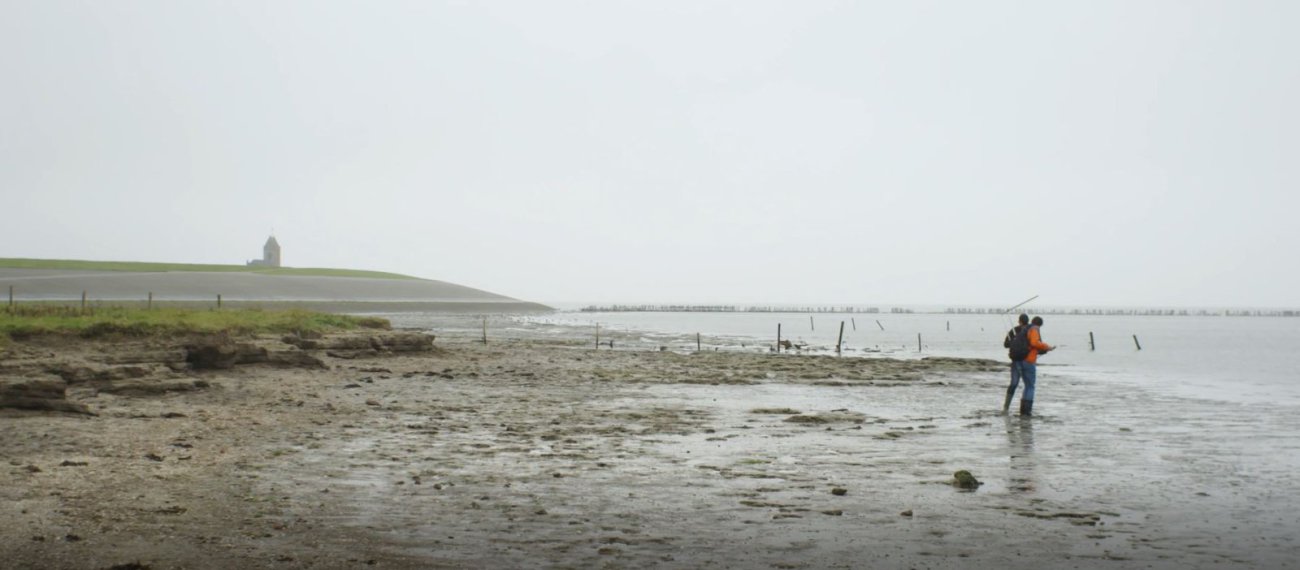
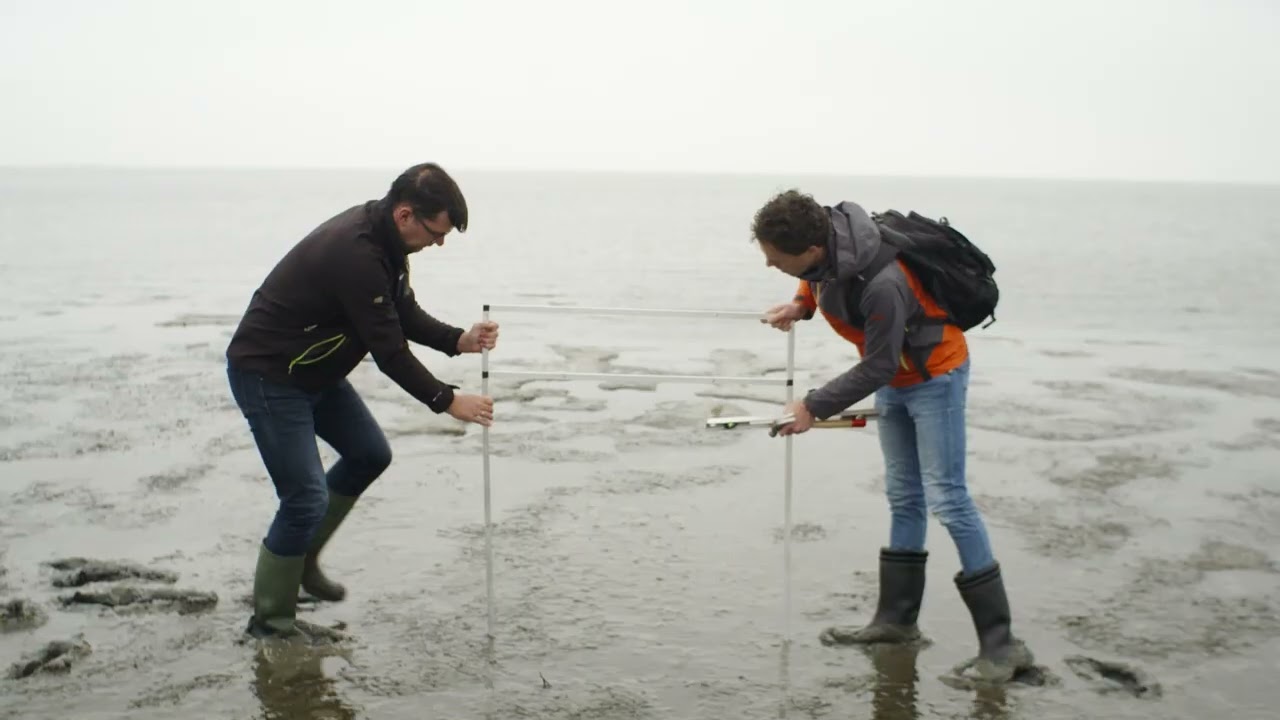
Until now, many of the Dutch dikes meet the safety requirements. And if they are rejected, it is easy to raise them. Problem solved, you might say. But raising the dikes has many consequences for the hinterland, which is why this project looked at 'living dikes'. In this project, the salt marsh, the overgrown piece of land between the dike and the sea, or the mud flats are used to protect the coast. 'We think that by making use of the overgrown land and mud flats, together they will be able to slow down the waves so that the dike will be less burdened,' says Borsje in the video below.
The vegetation on the salt marsh ensures that the sand and silt grow along with the rise in sea level. 'This could be a solution for many years to come,' predicts Borsje. Because the salt marsh grows with the sea level, less pressure from the waves is exerted on the dike, with the result that the dikes last longer and do not have to be raised.
To make sure it works in practice, the consortium is conducting many different studies. Both in the field and in the laboratory, at home and abroad and at natural and semi-natural salt marshes: 'How high are the waves? Will the salt marsh stay in place? How do foreshores in tropical areas contribute to wave attenuation? In addition, Borsje shows the Delta flume in Delft, where a large 'living dike' has been recreated. Waves can be simulated in the Delta flume: 'The largest artificial waves in the world'. The programme also develops models and tools that can be used in several places and the ultimate goal is to implement them: 'We are going to build our solution. In five years' time, it would be great if we could construct the first living dike in the Netherlands and have explored the possibilities of building living dikes worldwide'.
Would you like to read more about this research? You can do so on the website of NWO.
Want to know more about sustainable coastal management?
During NWO's Innovation festival TEKNOWLOGY Sierd de Vries (Assistant Professor in Coastal Engineering Sciences at TU Delft), Carola van Gelder-Maas (water expert and programme manager of Sand Motor and Coastal Genesis 2.0 of the Directorate-General for Public Works and Water Management) and Stuart Pearson (PhD in coastal engineering at TU Delft) will talk about sustainable coastal management. What are the innovations and how do we apply them? During an interactive session, innovation and implementation will come together and the Dutch Delta will be discussed further. You can register here. Participation is free of charge.